Picture a normal workday: you're at your screen from morning to evening, with a short lunch break before sitting right back down. By the time you leave your desk, your neck feels stiff, your shoulders are tight, and your whole back aches. If that sounds familiar, it's not a coincidence — it's a sign of what's commonly known as "Office Syndrome," and it's becoming more and more common among Thailand's working population.
So What Exactly Is Office Syndrome?
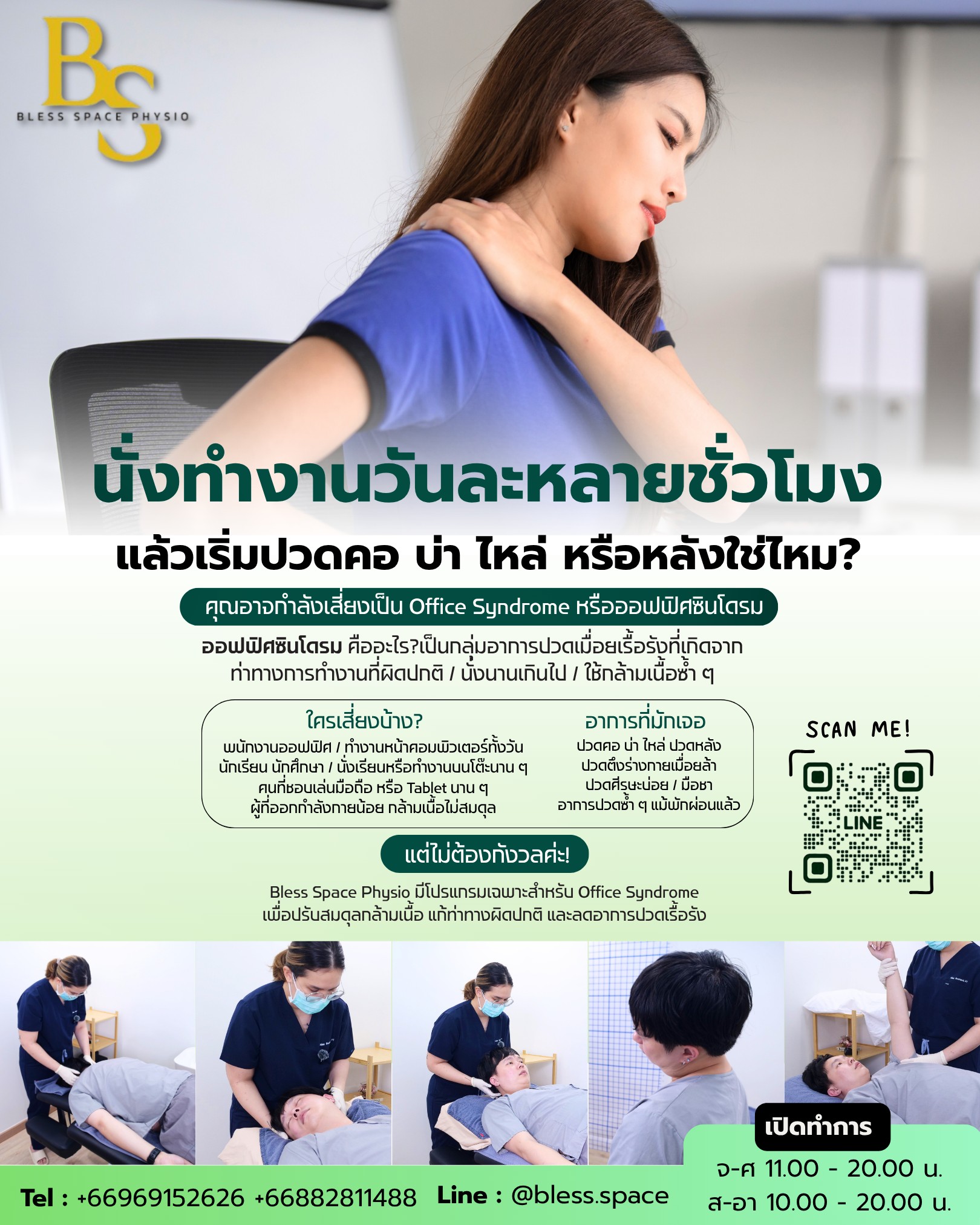
Simply put, Office Syndrome isn't a single disease — it's a cluster of chronic aches and pains caused by repeating the same poor postures over and over. Slouching, craning your neck at a screen for too long, or staying frozen in one position for hours on end all take a toll. When the same muscles are forced to work without rest, they build up tension, form what's known as trigger points, and eventually turn into the kind of chronic pain that's much harder to shake.
Who's Actually at Risk
Despite the name, the risk isn't limited to office workers. Anyone who spends hours doing deskwork is in the main risk group, sure — but so are students sitting through long lectures or study sessions, people glued to their phones or tablets for hours, and anyone who exercises too little to keep their supporting muscles strong enough to hold good posture. The label "office" is a bit misleading; the real cause is the posture, not the job title.
5 Warning Signs You Shouldn't Ignore
Your body usually gives you warnings well before things get serious. See if any of these sound familiar.
- Frequent neck, shoulder, or upper-back pain that disrupts daily life — not an occasional ache, but something that shows up almost every week and starts eating into your focus at work.
- Lower back pain after sitting for a while, or stiffness right after waking up — if you still feel stiff after a full night's sleep, that's worth paying attention to.
- Numbness or discomfort in your hands or arms during long typing sessions — usually a sign of nerve compression around the neck or shoulders.
- Frequent headaches, especially in the evening — often caused by tight neck and shoulder muscles radiating pain up toward the back of the head and temples.
- Muscles that tighten up easily and don't stretch the way they used to — try bending forward or turning your neck and notice if it feels stiffer than it should.
If you recognize even one of these patterns showing up again and again, that's not something to brush off. The longer it's left untreated, the more your muscles and joints adapt to the wrong posture, and the harder the resulting chronic pain becomes to treat.
Try setting a reminder to get up and move every 45–60 minutes during the workday. Just two or three minutes of walking, rolling your shoulders, and gently stretching your neck does more to prevent tension build-up than most people expect.
Can Massage Fix It, or Do You Need a Physiotherapist?
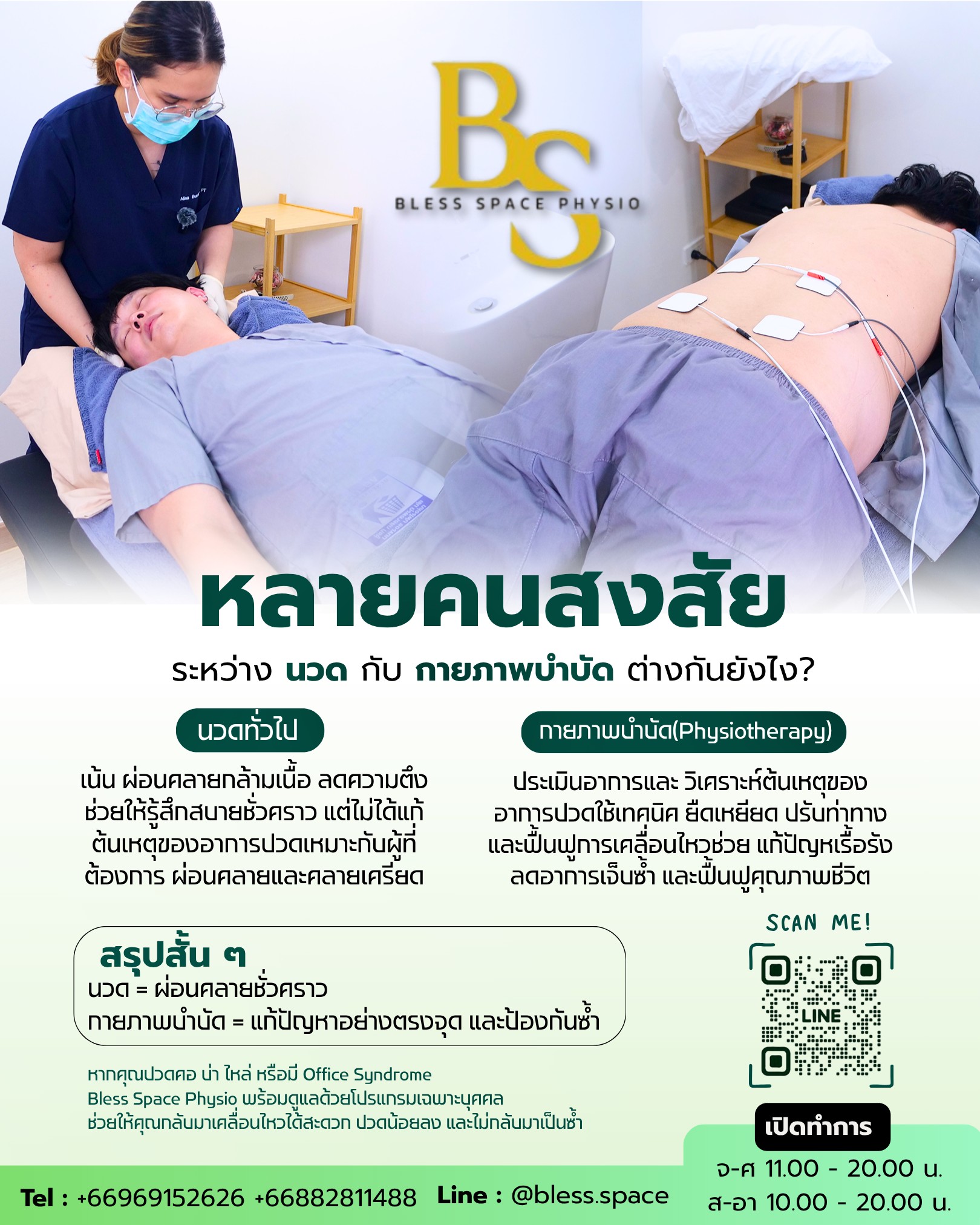
Plenty of people reach for a massage when the aches set in, and it really does help you feel better in the short term. But a general massage mainly loosens the muscle that's bothering you right now — it doesn't correct the posture or muscle imbalance causing it in the first place. If the pain keeps coming back week after week, that's your cue that it's time for a proper assessment from a physiotherapist, so the real root cause gets addressed instead of just the symptom.
How We Approach It at Bless Space Physio
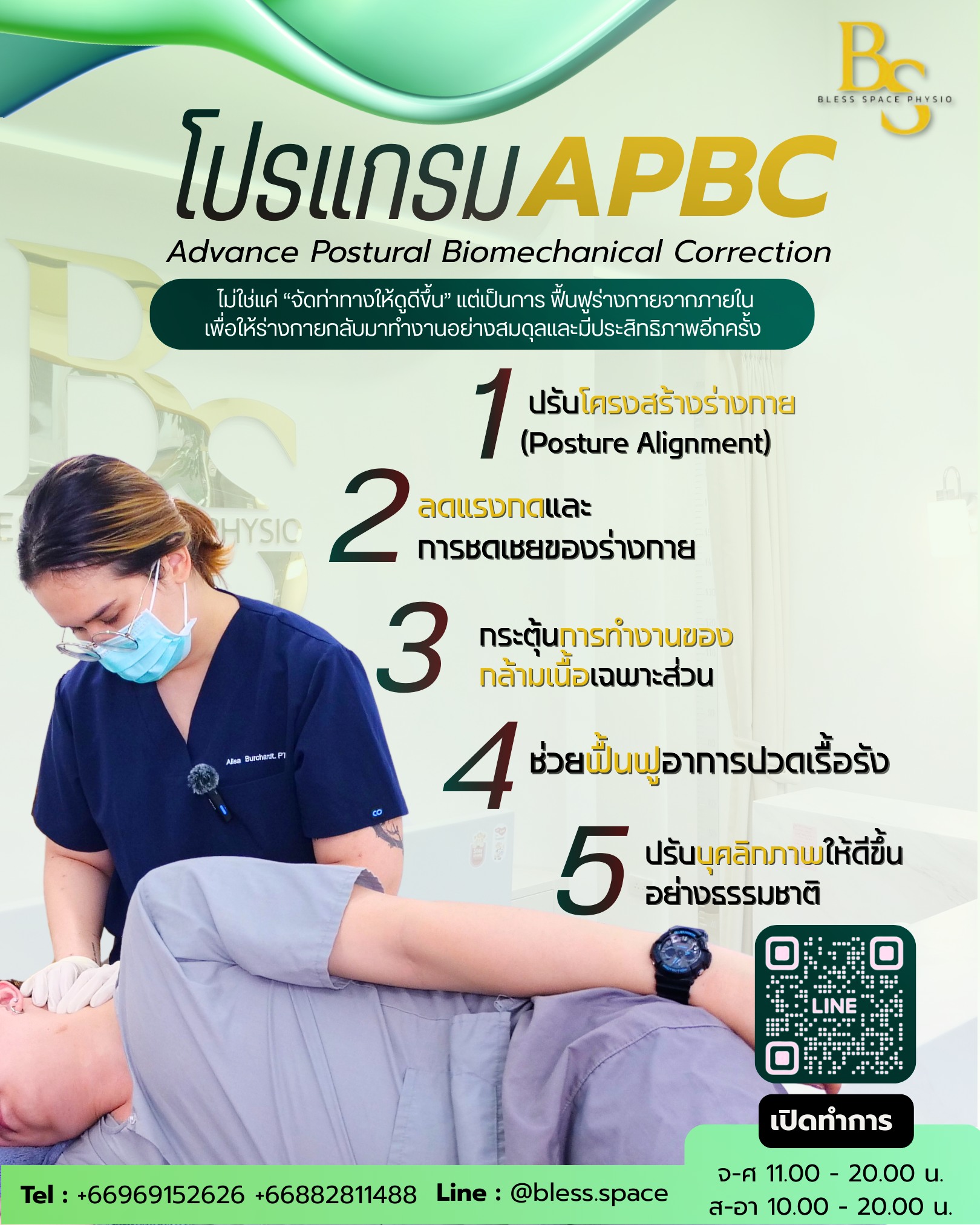
At Bless Space Physio, we run a dedicated program for Office Syndrome, starting with an assessment of each person's posture and movement patterns before building a plan to rebalance the muscles, correct the underlying posture issues, and reduce chronic pain at its source — rather than just treating the symptom at the surface. The goal is simple: get you back to working and living comfortably for the long run.
Start taking care of yourself today, before small aches turn into a chronic problem that follows you around for years to come.